


I pressed the power button, the screen lit up, and almost simultaneously, the battery icon in the lower right corner turned red—7% remaining. This had been my most familiar “opening scene” for three years. This ASUS TUF Gaming laptop had been with me through countless gaming nights, but now, it resembled a wheezing old soldier, inseparable from the charger in the corner.
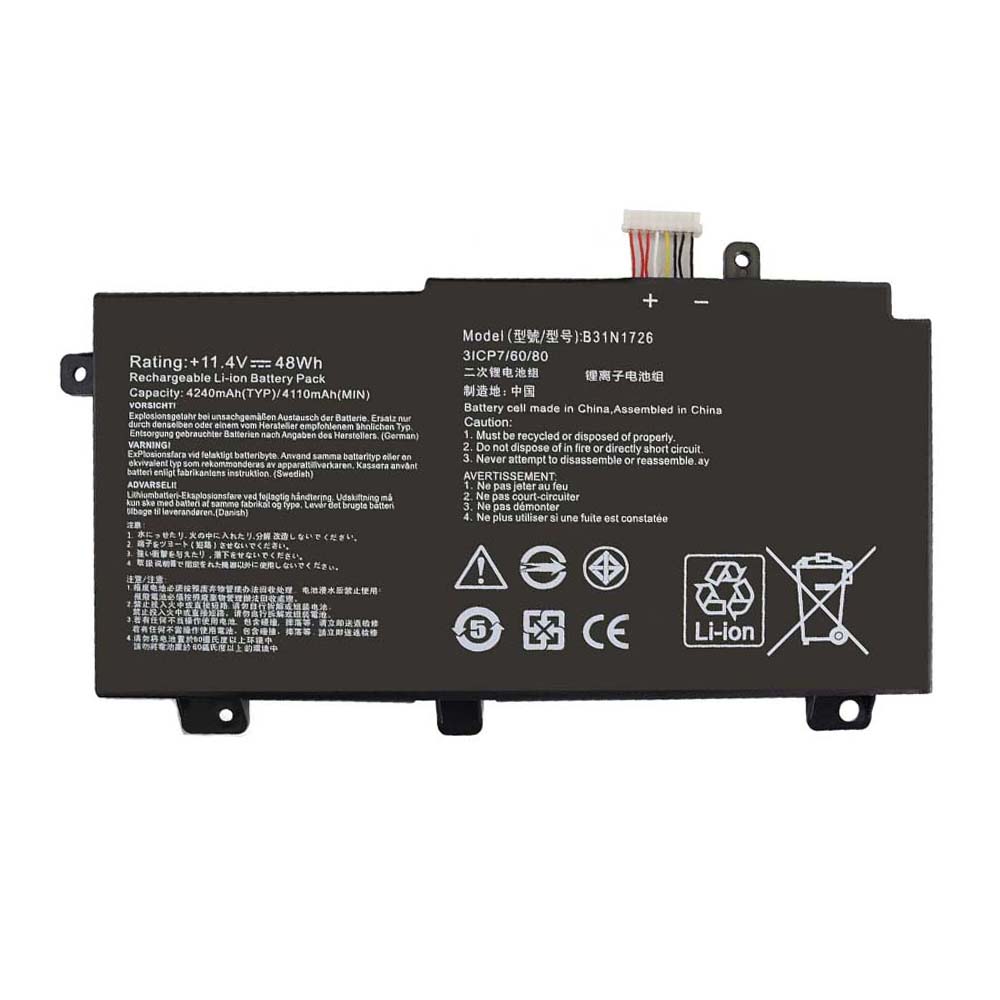
I flipped the machine over, removed ten screws, and the back cover gently popped open. There lay the dusty motherboard, the cooling fans, and that slightly bulging battery—the ASUS B31N1726. Its label had yellowed, like a medical chart recording three years of high-load operation: 11.55V, 48Wh, 5340mAh. These numbers were once a guarantee of performance; now, they were just markers reminding me it was time for a replacement.
The new battery was right beside me, the same model, the same specifications. But as I picked it up, I suddenly realized this wasn’t just “replacing a part.” This laptop’s memories are stored in the SSD, but its “rhythm of life” is determined by this battery. Every cheer after a gaming victory, the anxiety of working late into the night, smiles during video calls—all were powered by the “heartbeat” of this flat lithium polymer cell.
The installation process was surprisingly simple: disconnect the old battery cable, remove it, insert the new battery, connect. No sparks, no warning prompts, like changing the refill of a pen. But when I pressed the power button and saw the system display “100%, plugged in,” I realized something was different.
It wasn’t the numerical difference in battery life, but the repair of a relationship. I no longer needed to constantly watch the battery percentage, no longer distracted during intense team fights worrying about power. This freedom was something my computer hadn’t offered me in three years.
This new battery bore no traces of use, yet it would inherit my usage patterns. It didn’t know I had played Cyberpunk 2077 for eight hours straight, that I often forgot to charge it until the computer hibernated automatically, or that I sometimes gamed while plugged in—these “bad habits” would once again be etched into its chemical structure.
The laptop battery is the most paradoxical component in tech products: it’s a marvel of energy storage, yet destined to degrade; it grants devices mobility, yet is the most fragile component. The model number B31N1726 won’t appear on any ASUS promotional posters, but for every TUF Gaming FX706, every ASUS ROG Strix G531, the end-user experience is ultimately determined by this inconspicuous battery.
A week later, I took the laptop to a café. Three hours later, when I finished work and prepared to leave, the battery still had 42% remaining. That ordinary afternoon had no low-battery warnings, no frantic searches for an outlet—just a normally functioning battery, fulfilling the promise it was always meant to keep.
When we talk about laptops, we often mention the processor, graphics card, and RAM, but rarely mention the component that truly determines “freedom.” The battery isn’t like a CPU that can be overclocked or an RGB keyboard that changes colors—it just exists quietly, degrades quietly, and quietly needs replacement.
I closed the computer, feeling it was no longer a “patient” requiring careful attention but a companion restored to full vitality. The ASUS B31N1726 isn’t just a battery; it’s time itself—it gave me back the freedom I had when I first bought this computer three years ago, and this time, I know how to live with it better over the next three.